.png.2602061057200.webp)
South Florida’s tropical storms are high-velocity wind tests for your home's primary line of defense. While asphalt shingles are engineered for durability, extreme uplift forces and debris impact can compromise their structural integrity in minutes.
Identifying these vulnerabilities immediately after the clouds clear is essential. Delaying an inspection can allow minor displacements to evolve into structural rot and expensive interior mold.
Scan the Property Perimeter for Fallen Material
The most effective post-storm assessment begins at ground level. Walk the entire circumference of your property, looking specifically for shingle tabs—the rectangular sections of the asphalt—in your lawn, driveway, or pool deck.
Asphalt shingles are installed in an overlapping pattern to create a shedding system. High winds can shear these sections off the fasteners completely. If you find fragments on the ground, your waterproof barrier is broken, leaving the underlayment and wooden deck exposed to UV rays and rain.
If you can see wood or felt paper peeking through the roofline from the ground, the damage is already critical. This requires an immediate professional evaluation to prevent water from saturating your ceiling.
Audit Gutters for Accelerated Granule Loss
Check your gutter downspouts and splash blocks for an accumulation of sand-like grit. While some granule loss occurs over time, a tropical storm accelerates this through scouring, where high-velocity rain and wind physically strip the protective layer off the shingle.
These granules serve as "sunscreen" for your roof, protecting the underlying bitumen from South Florida’s intense UV radiation. When a storm strips this layer away, the asphalt becomes brittle and loses its waterproofing.
If your gutters are filled with grit after a storm, your shingles have likely lost years of their expected lifespan in a single afternoon. A professional integrity check can determine if the remaining asphalt is stable enough to survive the rest of the season.
Identify Compromised Seal Strips and Lifted Edges
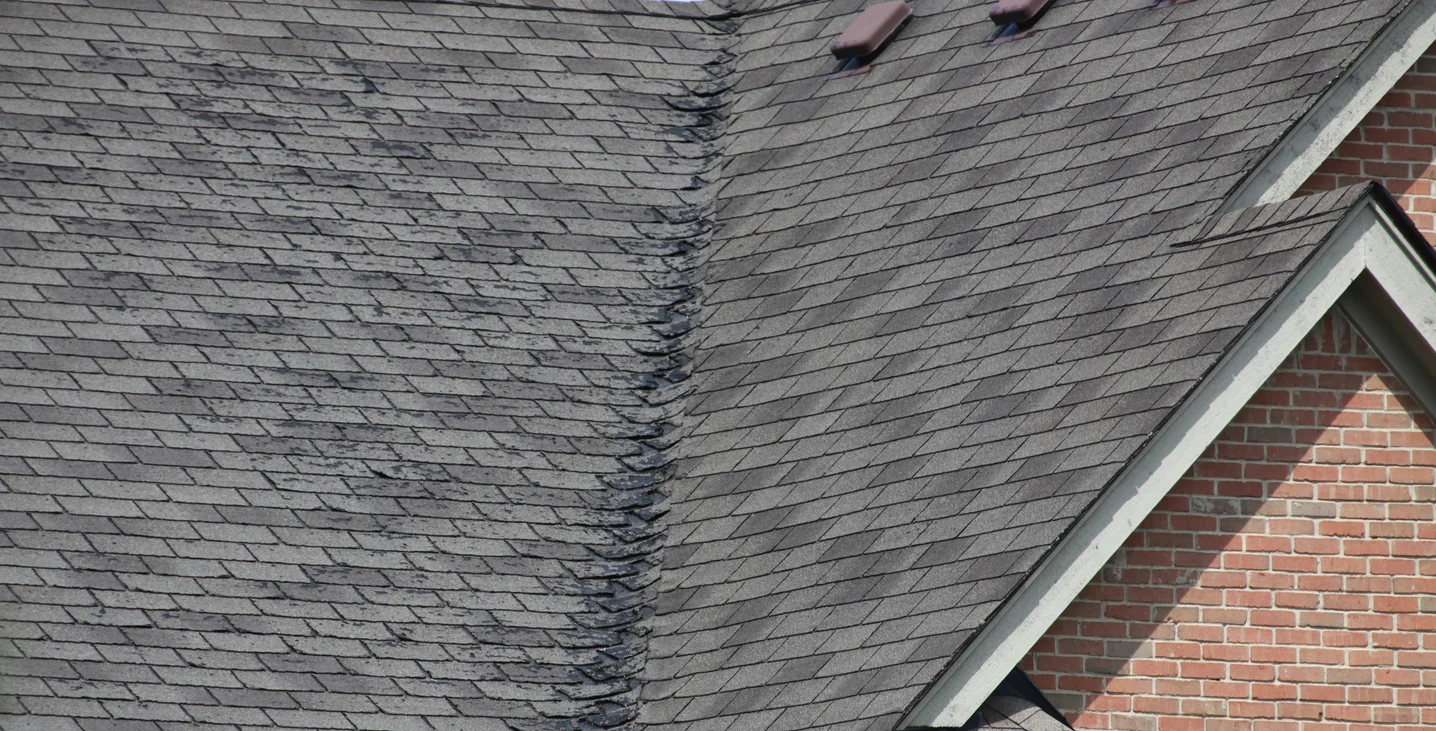
Using binoculars or a safe vantage point, look for shingles that appear puffy, curled at the corners, or have shadowed gaps beneath them. Tropical winds often break the seal strip—the factory-applied adhesive that bonds shingle courses together.
This is frequently a hidden form of damage. Even if a shingle looks like it is lying flat after the wind dies down, the adhesive bond may be broken. This allows the shingle to flutter during the next wind event, eventually snapping the internal fiberglass reinforcement.
If you notice any shingles that don't sit flush against the roof deck, the wind has compromised the seal. At this stage, a moisture test is necessary to see if wind-driven rain was forced underneath the shingles during the peak of the storm.
Check for Impact Bruising and Horizontal Fractures
Tropical storms often carry flying debris, such as palm fronds or branches, that strike the roof with significant force. Look for dark, circular indentations or straight-line cracks across the face of the shingles.
When a heavy object hits an asphalt shingle, it creates a "bruise." This impact displaces the granules and fractures the internal mat. These fractures act like a straw, wicking water through the shingle via capillary action and rotting the wood deck unseen.
Furthermore, wind can fold a shingle backward, snapping the mat and creating a horizontal crease. If you see physical dents or creased shingles, the barrier is no longer solid and will likely fail during the next heavy downpour.
Perform an Internal Attic Audit for Moisture
The final check should take place inside the home. Enter your attic with a high-powered flashlight and look for dark staining on the rafters or the underside of the plywood roof deck.
Water staining often appears as amber or dark brown rings around nails or along the seams of the wood. In severe cases, you may even see daylight peeking through where a shingle was completely stripped away.
Any sign of internal moisture is an emergency; it indicates that the secondary water barrier has been breached and the structural wood of your home is actively absorbing water. Because mold can begin to grow within 24 to 48 hours, internal staining is a clear signal to call for professional intervention immediately.
At Hogan Construction & Roofing, we bring over 25 years of technical field experience to every South Florida home we service. Our team understands that storm damage is often invisible to the untrained eye, which is why we provide meticulous residential roof inspections to verify the safety of your property. We specialize in precision roof leak repairs and asphalt shingle restoration, ensuring your home is prepared for whatever the next tropical system brings.
Don't let a hidden leak compromise your sanctuary. Connect with our bilingual experts at (954) 371-1964 to schedule a forensic storm inspection or use our online portal to lock in your evaluation before the next front moves in.