.png.2602061057200.webp)
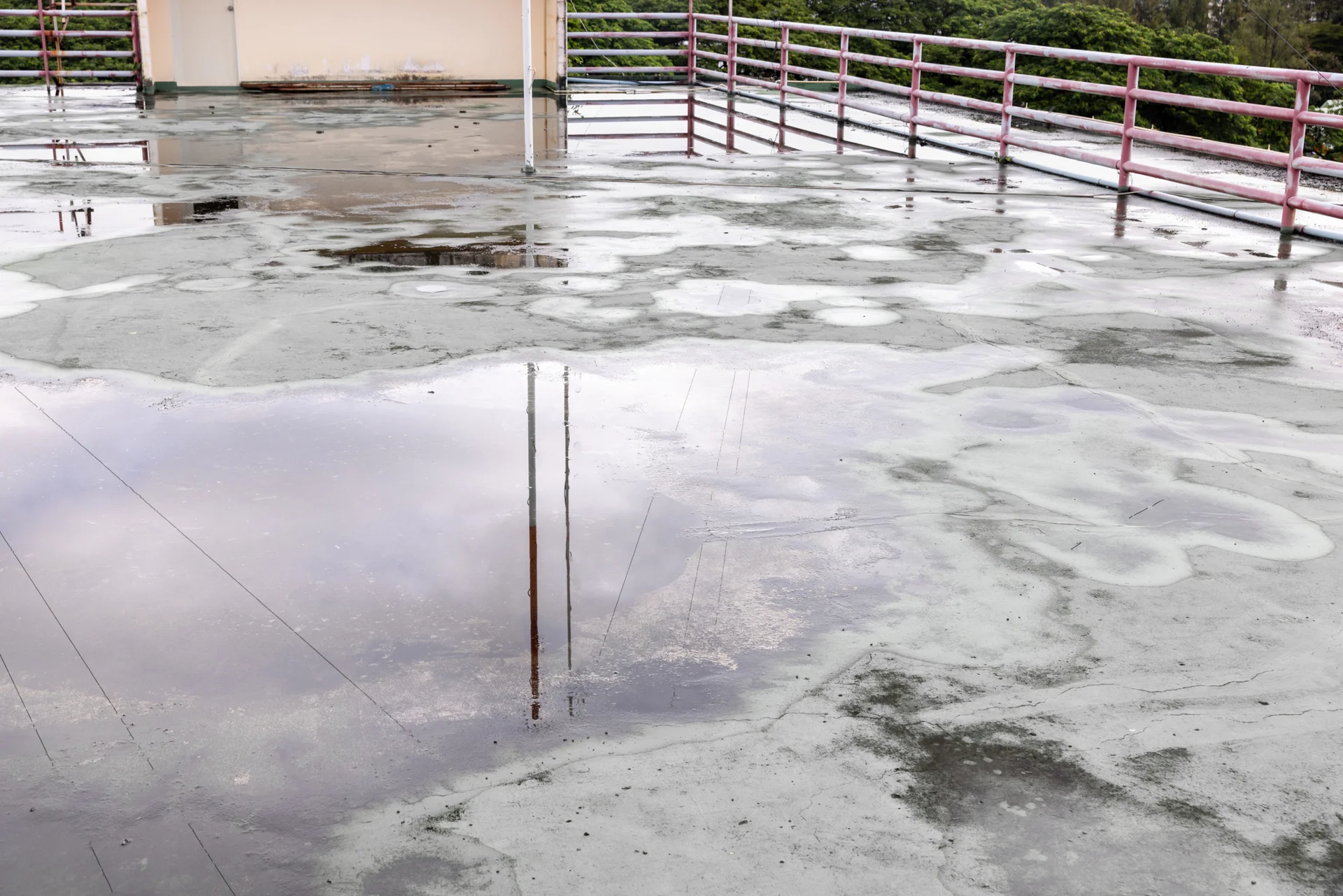
For commercial property owners in South Florida, the roof is often a case of out of sight, out of mind—until the ceiling starts dripping in the warehouse or front office. Flat roofs are common in our area for their cost-effectiveness and ease of equipment storage, but they come with a specific enemy: ponding water. If you see standing water on your roof 48 hours after a rainstorm, you’re not just looking at a puddle; you are looking at a ticking time bomb for your building’s structural integrity.
Understanding the Mechanics of Ponding Water
Ponding water is officially defined as water that remains on a roof for more than 48 hours. On a flat roof, gravity is not your best friend, and even a slight indentation can become a collection point. While most modern roofing materials are designed to be water-resistant, they are not intended to be submerged for days or weeks at a time.
When water sits, it creates a magnifying glass effect under the intense Florida sun, heating up the roof membrane and accelerating the breakdown of the material. This heat cycle causes the roof to expand and contract rapidly, leading to cracks that eventually let moisture seep into the insulation and decking below.
To identify if your commercial property is at risk, watch for these specific indicators:
- Deep Discoloration: Dark rings or stains on the roof surface where water has previously evaporated.
- Algae and Vegetation: Tiny plants or "slime" growing in low spots, which hold moisture against the membrane.
- Cracked Membrane: Look for alligatoring or small fractures in the top layer of the roof.
- Increased Humidity: A sudden rise in indoor humidity levels or a musty smell in the upper floors of your building.
Why Flat Roofs Still Need a Slope
No roof should be perfectly flat. To function correctly, commercial flat roofs require a slight pitch to direct water toward drains, scuppers, or gutters. Over time, buildings settle, or the original design might have lacked the necessary taper, leading to low spots where water naturally congregates.
When water pools, its weight adds significant stress to the building. Just one inch of standing water weighs approximately five pounds per square foot. On a large commercial roof, that extra weight can cause the roof deck to sag further, creating an even deeper pond and a cycle of damage that can eventually lead to a structural failure.
Addressing drainage issues involves several technical layers:
- Ensuring that all primary drains and overflow scuppers are clear of debris like leaves and trash.
- Checking the integrity of the seals around the drain to prevent underflow leaks.
- Installing tapered insulation systems during a replacement to create an artificial slope toward the exits.
The Hidden Damage of Water Intrusion
The most dangerous part of ponding water is what you cannot see. Once water gets past the top membrane, it saturates the insulation boards. Saturated insulation loses its ability to keep your building cool, which sends your energy bills through the roof—literally. Even worse, wet insulation can stay damp for months, providing the perfect environment for mold to grow inside your walls and ceilings.
In South Florida, the salt air can also mix with ponding water, creating a corrosive brine that eats away at metal fasteners and structural steel. What started as a simple puddle can quickly evolve into a costly interior renovation if the water reaches your inventory, electrical systems, or office equipment.
Common consequences of ignored ponding include:
- Compressed Insulation: The weight of the water crushes the insulation, ruining its R-value and thermal protection.
- Adhesive Failure: Standing water breaks down the glues and tapes used to seal roof seams.
- Pest Infestation: Stagnant water attracts mosquitoes and other insects, which can find their way into the building.
- Voided Warranties: Many manufacturers will not honor a warranty if they find evidence of long-term ponding that was never addressed.
Protecting Your Commercial Investment
The best defense against water intrusion is a consistent maintenance schedule. A professional eye can spot the subtle signs of sagging or membrane thinning before a leak occurs. Because commercial roofs are complex systems, trying to patch a ponding area with a bucket of sealant from a big-box store often traps moisture inside rather than keeping it out.
Regularly scheduled checkups after major weather events are vital. By clearing the waterways of your roof, you ensure that the system can do exactly what it was designed to do: shed water as quickly as possible. This proactive approach saves thousands in emergency repairs and helps you get the full lifespan out of your roofing investment.
From Prevention to Professional Restoration
Managing a commercial property requires a focus on long-term value and safety. Addressing ponding water early is not just about stopping a leak; it is about preserving the structural health of your building and the comfort of everyone inside. Taking the right steps now ensures that your facility remains dry and operational even through the most intense South Florida seasons.
At Hogan Construction & Roofing, we specialize in technical solutions for complex commercial systems. We provide expert flat roof installations and targeted roof repairs designed to eliminate drainage issues. Our team also offers professional maintenance and waterproofing services to reinforce your building’s envelope and prevent moisture from becoming a permanent problem.
Do not let standing water compromise your business operations. Contact Hogan Construction & Roofing today at (954) 371-1964 or schedule a commercial roof evaluation online to protect your property.