.png.2602061057200.webp)
South Florida’s tropical climate is world-renowned for its lush landscapes, but that same humidity and heat create a relentless breeding ground for biological growth on residential rooftops. For many homeowners, dark streaks or green patches are dismissed as mere "dirt" or "soot."
In reality, these are living organisms that can actively degrade the structural integrity of your roofing system. Understanding the science behind this growth is the first step in preserving your home’s curb appeal and its lifespan.
Identifying Gloeocapsa Magma and Black Algae Streaks
The most common culprit for dark discoloration on South Florida roofs is a cyanobacteria called Gloeocapsa magma. Often mistaken for mold or mildew, this bacteria typically appears as long, black streaks that smear down the slope of the roof.
This organism thrives on the limestone filler used in many modern asphalt shingles. As the bacteria feed on the limestone, they shed a dark, UV-protective outer coating that creates the visible black stains.
Beyond the aesthetic decline, these dark patches act as a thermal sponge. By absorbing solar heat rather than reflecting it, black algae can significantly spike attic temperatures and increase your monthly cooling costs.
Recognizing Moss and Mold Infestations
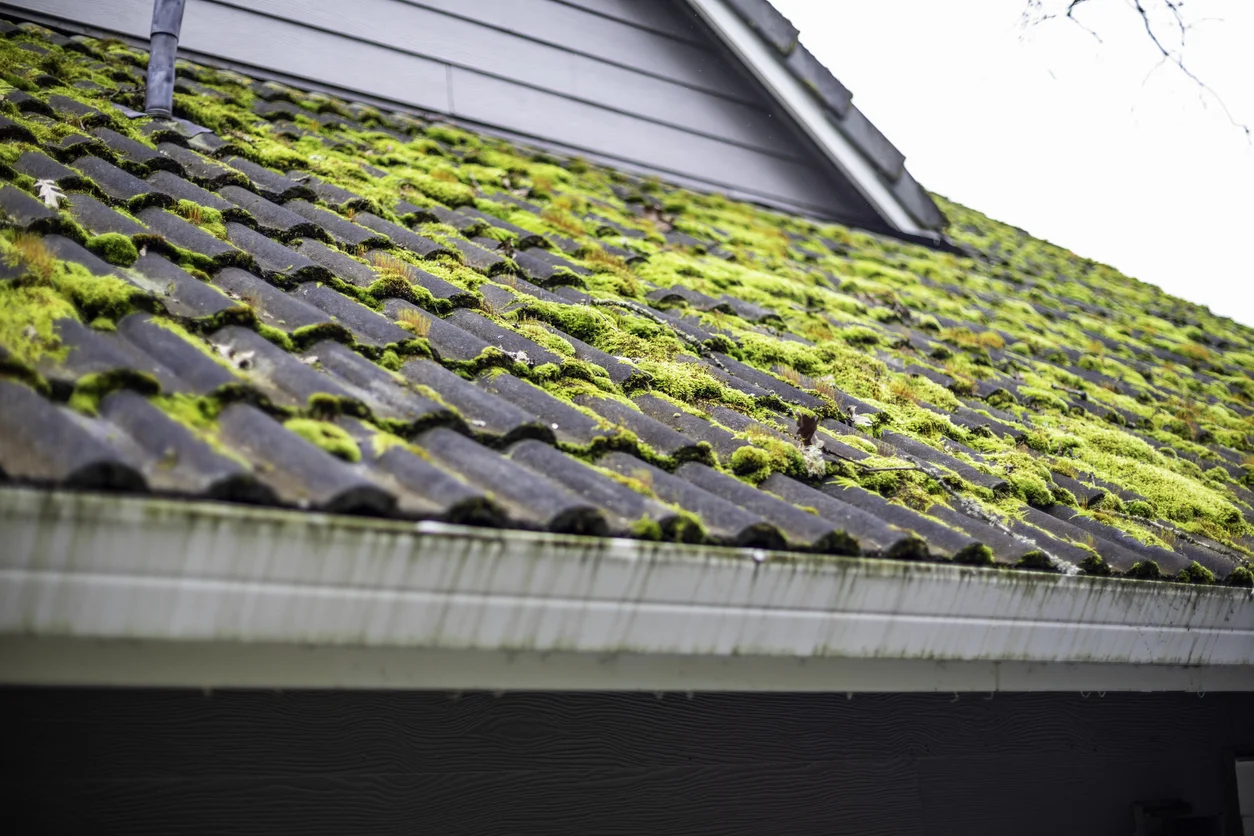
While algae streaks are common on sunny slopes, moss and mold prefer the damp, shaded valleys and north-facing sections of a roof. Moss appears as thick, green, fuzzy cushions, while mold often presents as slimy, dark spots.
Moss is particularly dangerous because it is hydroscopic, meaning it acts like a sponge. It holds moisture directly against the roof surface long after the rain has stopped. This constant dampness can cause shingles to rot or tiles to lose their protective seal.
Furthermore, mold spores can eventually migrate through the roof deck and into your attic. This potentially compromises your home’s internal air quality and HVAC system if the growth is left unchecked.
The Physical Science of Surface Degradation
Biological growth does more than just sit on the surface; it actively works to bypass your roof’s shedding system. Moss and lichen have root-like structures called "rhizoids" that can physically lift the edges of shingles or find microscopic cracks in roof tiles to anchor themselves.
Once these organisms take root, they disrupt the natural flow of water. This creates damming, where water is forced backward under the shingles or tiles instead of flowing into the gutters.
Additionally, the dark pigment of the growth destroys the "cool roof" ratings of light-colored materials. This leads to accelerated thermal expansion and contraction that cracks the roofing substrate over time.
Safe Mitigation vs. Destructive Cleaning Methods
When homeowners notice growth, the immediate instinct is often to use a high-pressure washer. In the roofing industry, high-pressure water is considered a primary enemy of asphalt shingles and tile sealants.
The force of a pressure washer can strip away the protective mineral granules of a shingle. This effectively ages the roof by a decade in a single afternoon. The industry standard for management is "soft-washing" using eco-friendly biocides and low-pressure delivery systems.
For long-term prevention, many South Florida residents opt for the installation of copper or zinc strips. These metals release ions during rain that naturally inhibit the return of algae and moss.
Preservation Through Professional Oversight
Ignoring biological growth turns a simple maintenance task into a premature roof replacement. Algae and mold are persistent, and once they have compromised the bond of your shingles or the integrity of your tiles, the roof is vulnerable to wind uplift.
A balanced approach that prioritizes structural preservation over a quick clean is the only way to ensure your roof reaches its full intended lifespan. This is especially true in our unique tropical environment, where organic growth is a constant battle.
At Hogan Construction & Roofing, we bring over 25 years of local technical expertise to every property we evaluate. We understand that South Florida’s environment requires a specific, methodical approach to maintenance. Our team provides professional residential roof inspections to assess organic damage and performs precision leak repairs to address vulnerabilities caused by biological growth.
Protect your investment from the inside out with a team that understands the Diamond Standard of South Florida roofing. Contact Hogan Construction & Roofing today at (954) 371-1964 or visit our online portal to schedule your expert roof assessment.